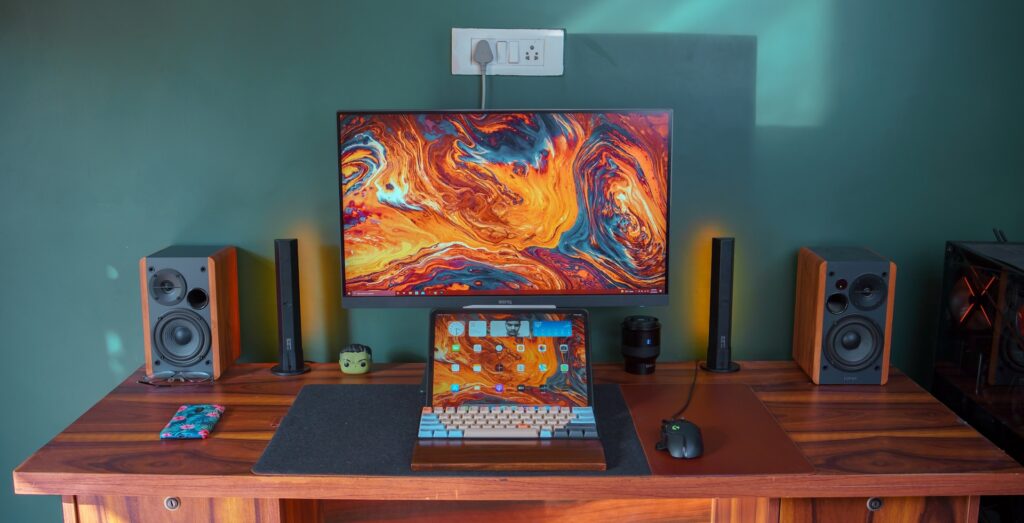
There’s a difference between a desk that holds your tools and one that holds your time. One supports action. The other supports attention. In a world where work often spills across hours and tabs, designing a workspace isn’t just about what fits—it’s about how it feels to stay. Oakywood’s approach begins here: not with productivity hacks, but with materials and shapes that respect how time unfolds.
Designing for hours, not just tasks
Most desks are built for action—writing, typing, clicking. But the real test of a workspace is how it supports you through a whole day. That includes the slow starts, the bursts of clarity, the mid-afternoon slump. A desk shelf creates space to stretch, to breathe. A valet tray becomes a place for pause—a landing pad for the objects that carry meaning between moments. These aren’t shortcuts. They’re supports for staying present over time.
Texture as a rhythm
Time moves differently when your hands touch real wood. A wooden laptop dock, a felt desk mat, a powder-coated steel clip—these materials slow the moment, just enough to make it feel grounded. There’s no algorithm here, no notification. Just texture that encourages presence. When the surface beneath your work feels natural, the work often does too.
Boundaries that hold space
Time management isn’t just about schedules—it’s about separation. Where does work begin? Where does it end? A good workspace draws those lines gently. A modular drawer closes at the end of the day. A headphone hook means music starts with a small, physical ritual. These touchpoints create rhythm—not with alarms or apps, but with place and habit.
Not everything needs to be seen
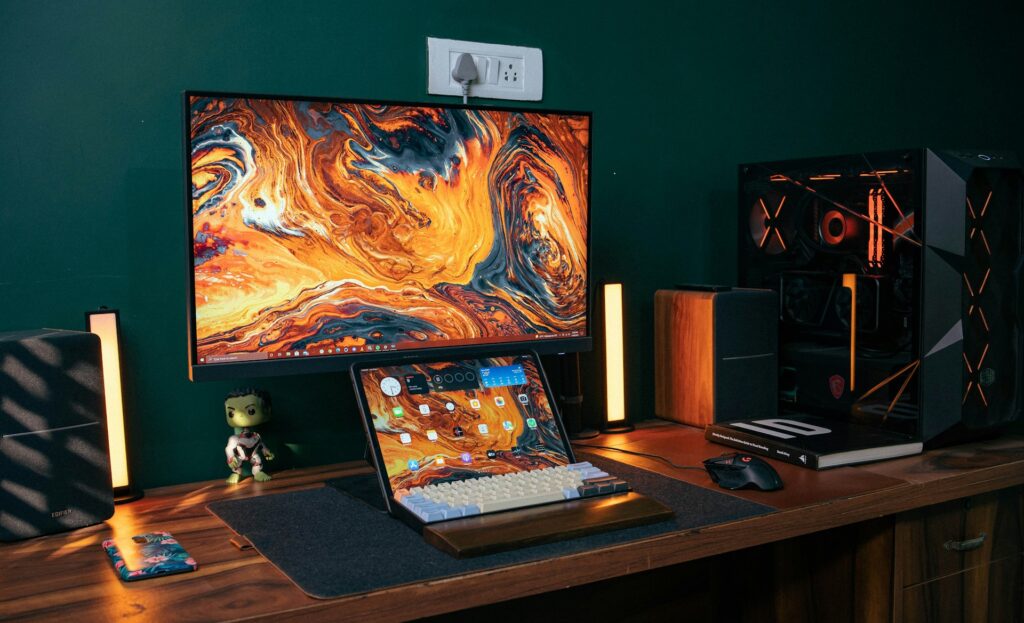
The longer you sit at a desk, the more important discretion becomes. Not everything has to be on display. Not everything has to shout. Oakywood’s storage solutions—small drawers, hanging organisers, wooden trays—keep essentials close, but not visible. This visual quiet gives the mind a place to settle. It reduces the micro-decisions that wear down focus.
A desk that remembers how you work
No two days are alike. Some start with planning. Others, with motion. Some are full of tabs. Others, entirely analogue. A good workspace responds, without resetting. Oakywood’s pieces aren’t fixed—they’re modular, adjustable, and easy to move. The desk becomes a partner, not a platform. It holds your rhythm without enforcing one.
Materials that mark time
Plastic wears out. Real wood wears in. Over time, it deepens in colour, softens in tone, and gains the character of its user. These signs of time aren’t damage—they’re memory. They reflect the hours spent thinking, building, solving, pausing. This is the quiet reward of choosing well-made tools: they don’t just last. They evolve with you.
The difference is felt, not just seen
The best workspaces aren’t defined by how they look in photos. They’re defined by how they feel at 10:03 on a grey Tuesday morning. By how they support your wrist. How they hold your tools. How they respond when the work is slow, or hard, or flowing. Oakywood’s designs answer to that experience—not by speeding it up, but by honouring its pace.